SBHS Aerospace
Airbrakes for our ARC rocket
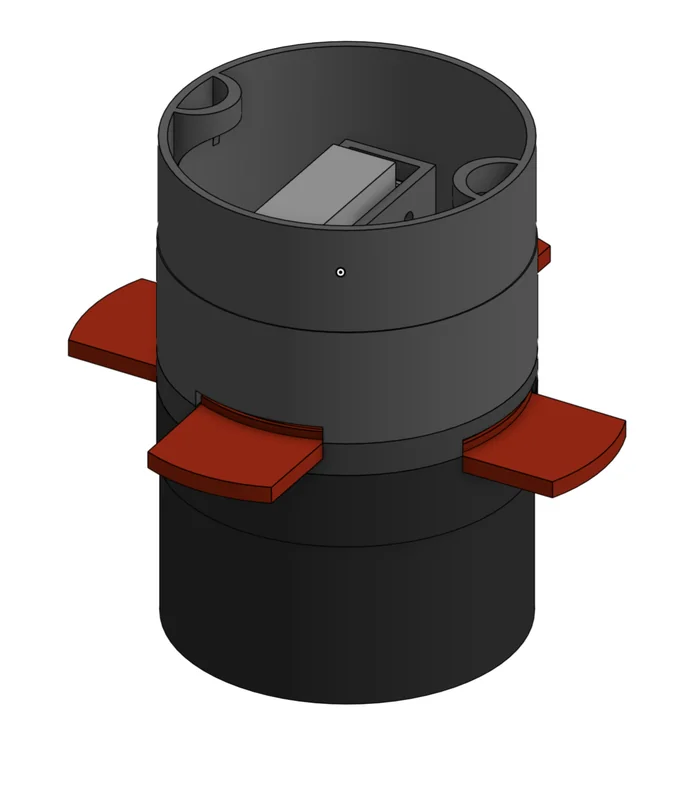
Four flaps fold out of a 3D-printed section of the rocket to add drag and slow it down near 750 ft. We've finished the CAD and written the flight code, called Rocket++. The picture is a CAD render.
A new SBHS club · Monmouth Junction, NJ
SBHS Aerospace Club is a student-run club in Monmouth Junction, New Jersey. Members work on rocketry, electronics, CAD, programming, and aerospace experiments through workshops, projects, and competitions.
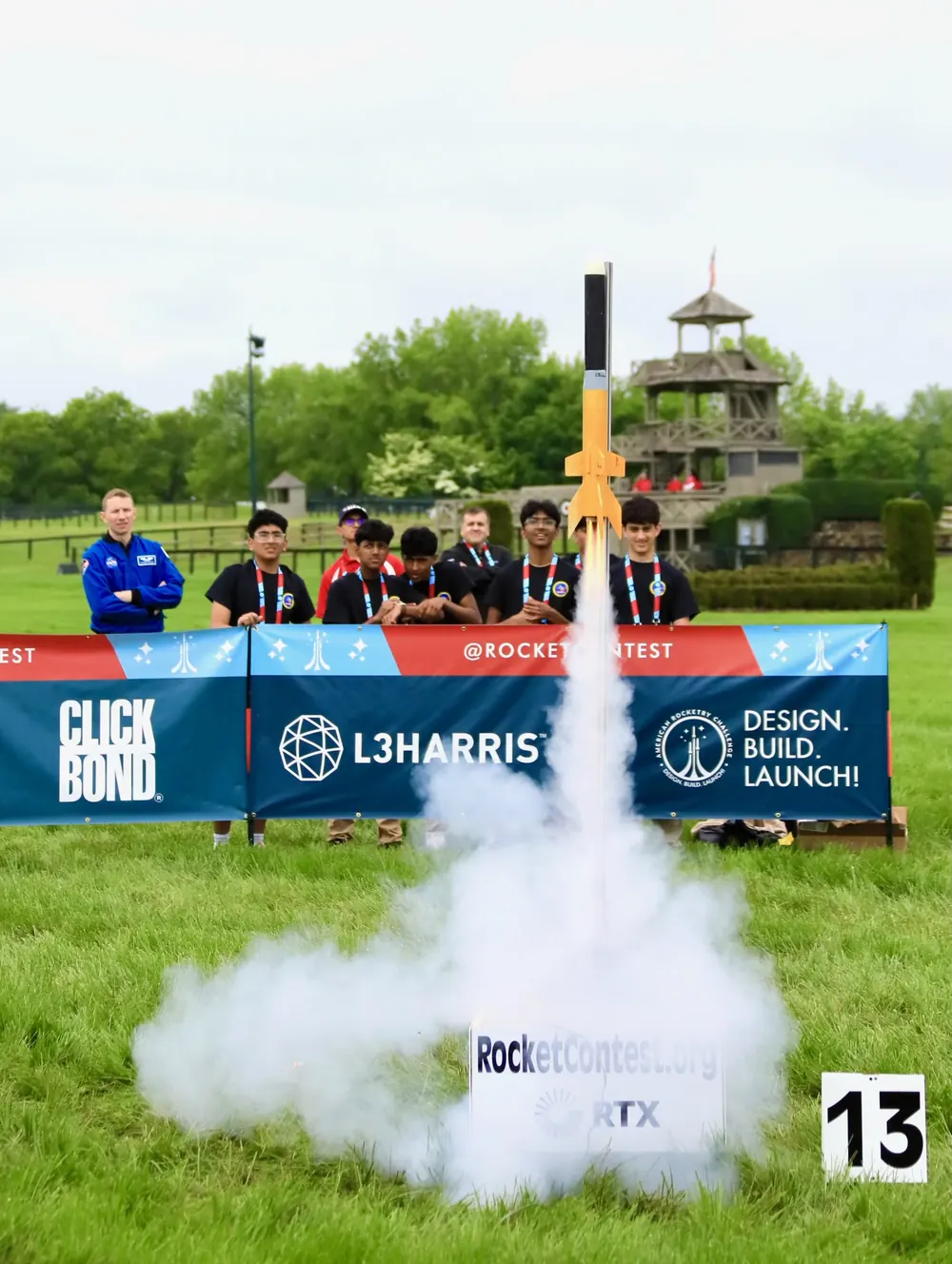
Earned as South Brunswick Aerospace Club, the nonprofit that came before the SBHS club.
01 / What we do
Students run every project here. If you already know how to do something, you help teach it to someone who doesn't.
We build rockets for the American Rocketry Challenge. Before we cut or print anything, we model the rocket in OpenRocket to make sure it's stable and will get close to the target altitude.
Microcontrollers, sensors, and a lot of wiring. Recent work includes the controller for our airbrakes and the data logger inside our NASA TechRise payload.
Most parts start in Onshape and end up on a 3D printer. We also use CFD to see how things like airbrake flaps change the airflow around the rocket.
C++ for the airbrake flight code, Python for the payload's data logging, and CircuitSpace, a small web app we made for planning rocket wiring.
02 / So far
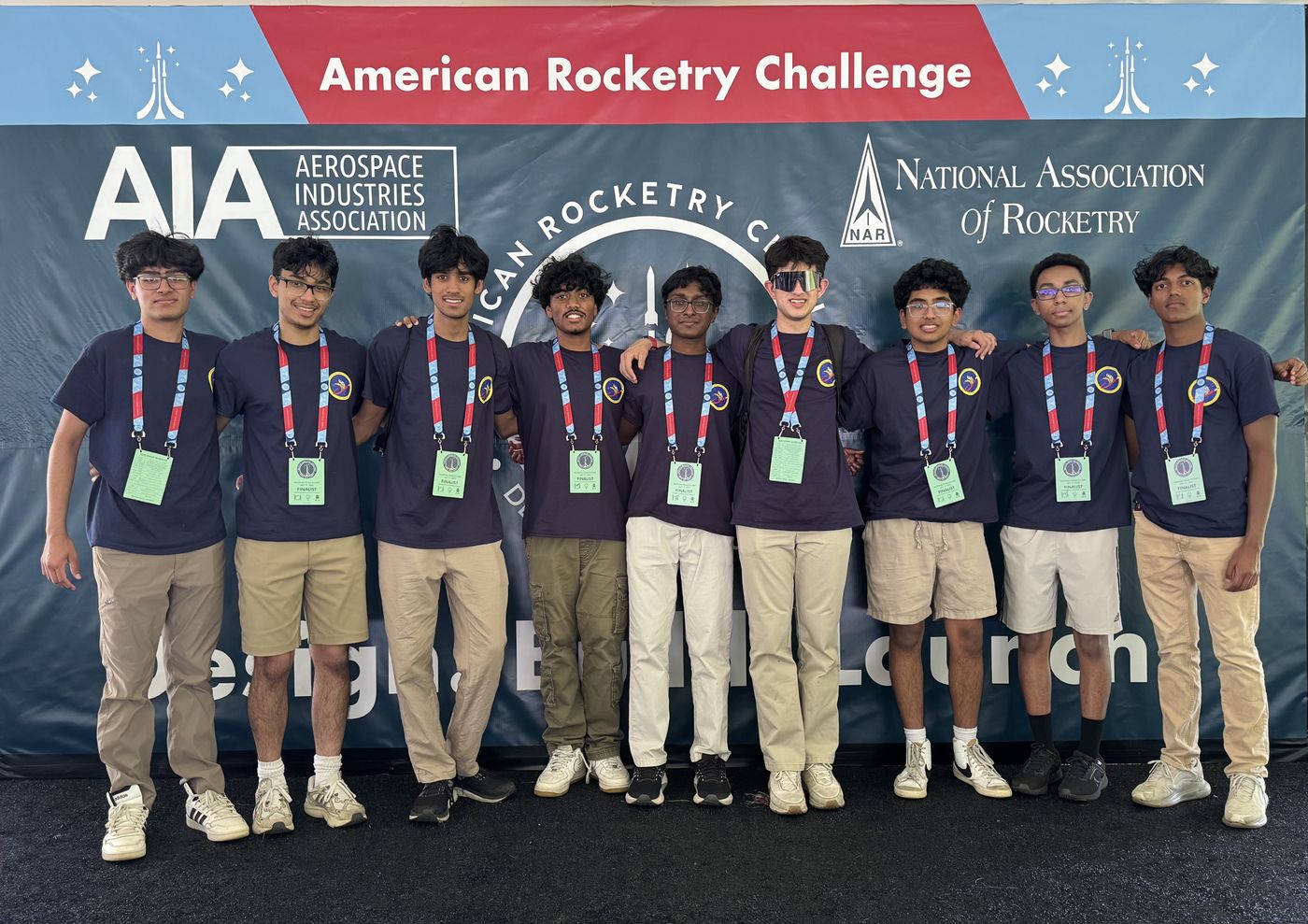
Our teams made the 100-team American Rocketry Challenge National Finals in Virginia in 2024, 2025, and 2026. One of those teams finished 50th.
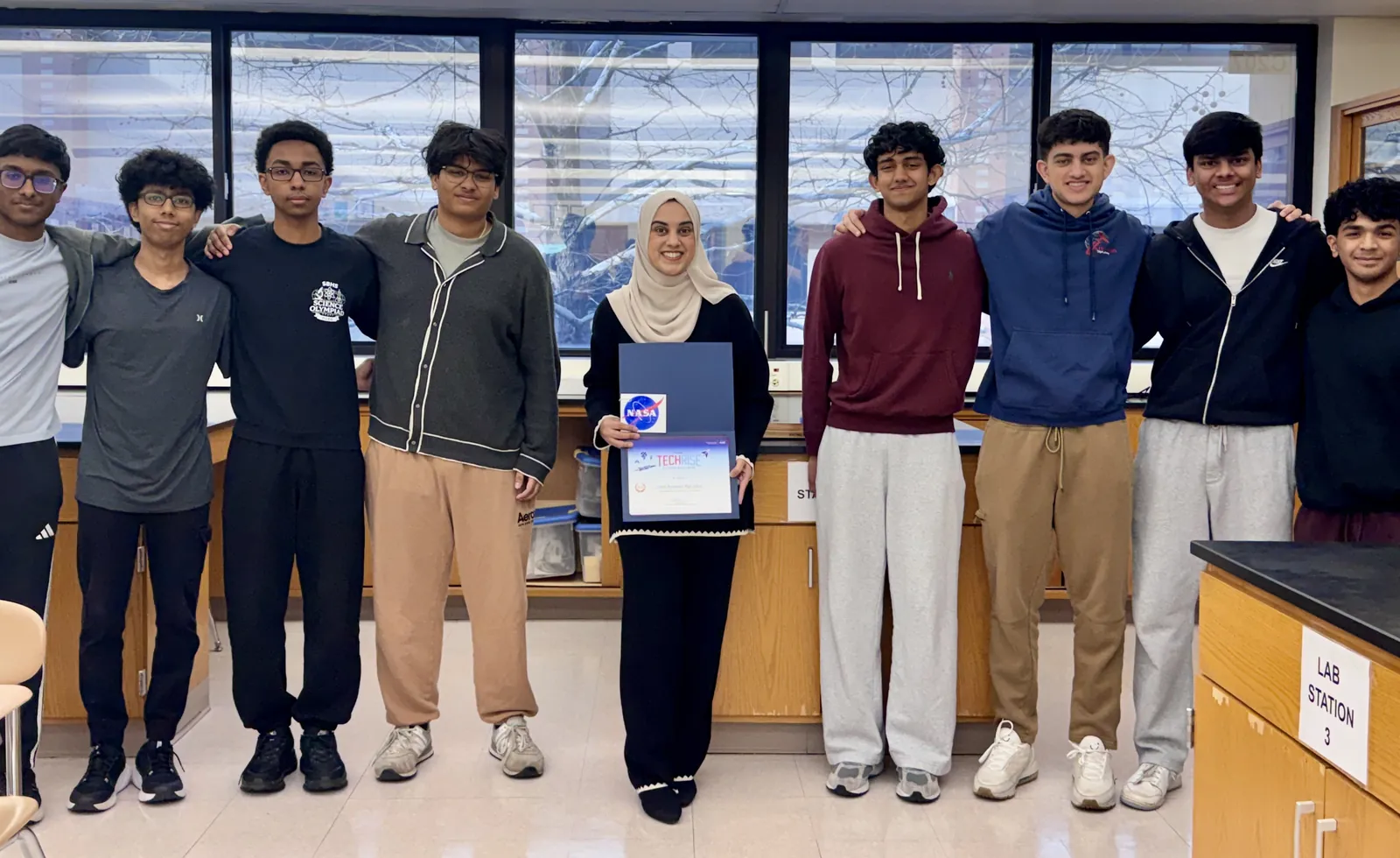
Our NDVI payload, which measures light reflected off the ground to map vegetation, was picked as a TechRise Student Challenge winner.
The school approved the club this fall. Members who meet the requirements can now get it on their transcript.
Earned as South Brunswick Aerospace Club, the nonprofit that came before the SBHS club. How we got here
03 / Projects
Some of these have flown and some are still on the workbench. Here's where each one is.
Four flaps fold out of a 3D-printed section of the rocket to add drag and slow it down near 750 ft. We've finished the CAD and written the flight code, called Rocket++. The picture is a CAD render.
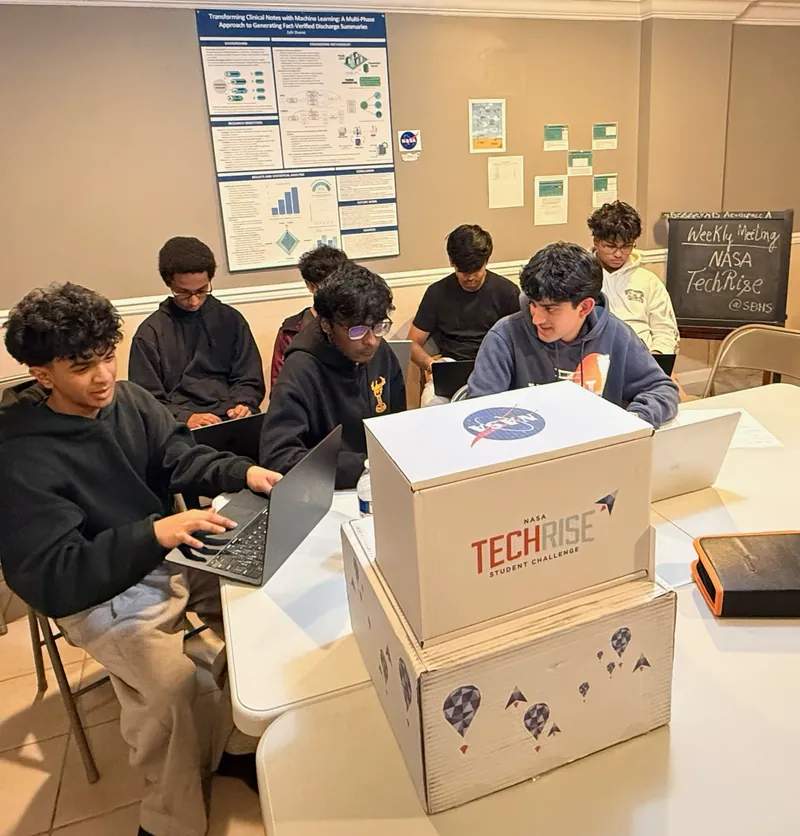
A prototype payload that measures visible and near-infrared light so we can map vegetation. Every second, it saves flight data and sensor readings to an SD card.
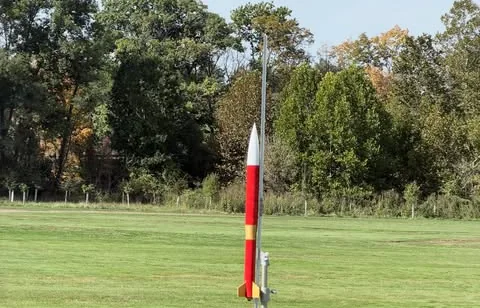
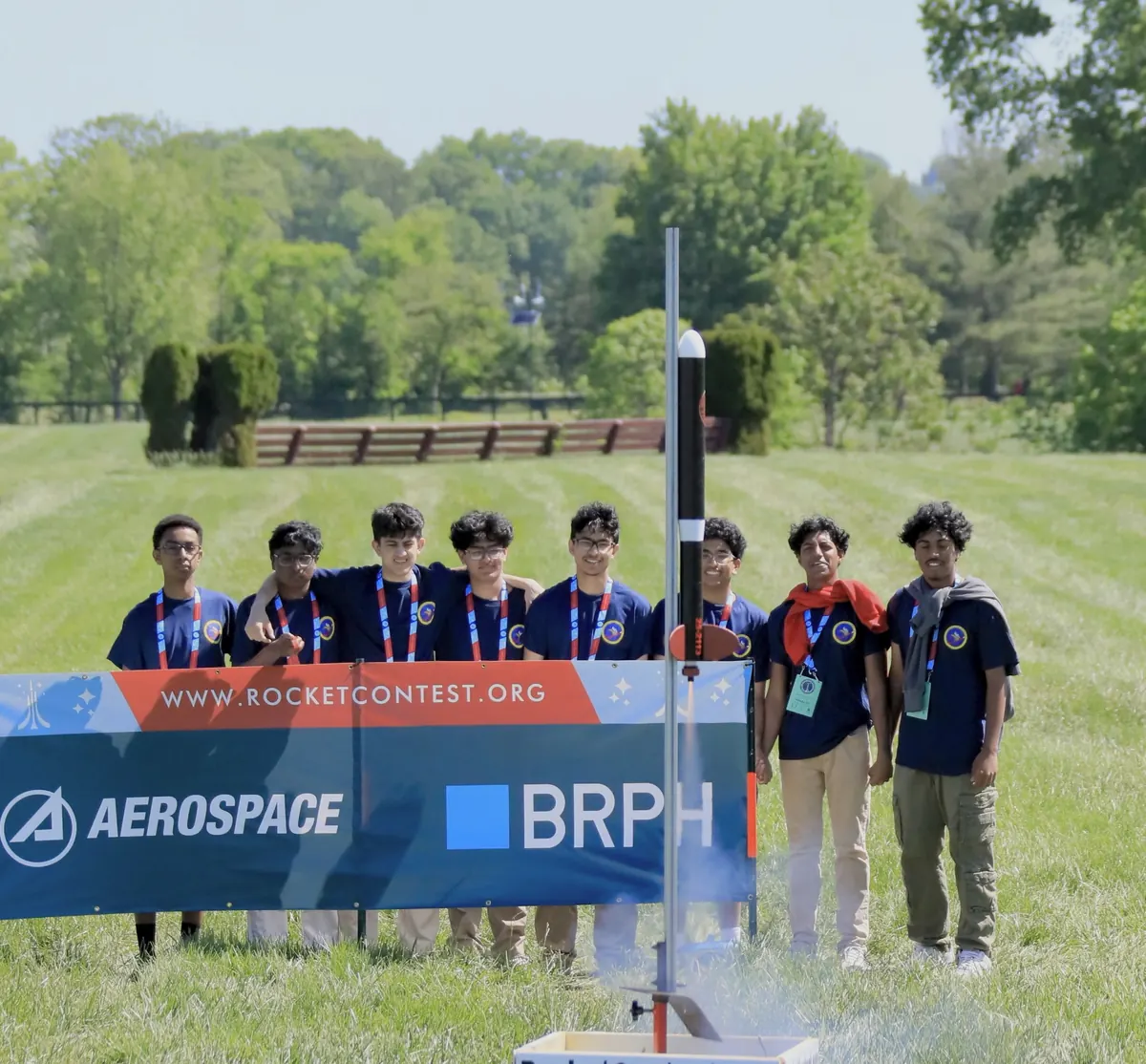
Every season a team builds a rocket that has to carry a raw egg to a set altitude and bring it back uncracked. Our teams flew at the National Finals in 2024, 2025, and 2026. This is the current build on the pad at a World Space Week launch in October 2026.
04 / Join
Any SBHS student can join as a general member, and you don't need any engineering experience. Competitive teams are separate and have their own tryouts.
This year's competitive teams are working on the American Rocketry Challenge, NASA TechRise, Genes in Space, Cubes in Space, the Aviation Design Challenge, and the REC Foundation Aerial Drone Competition.